All Categories
Featured
Table of Contents
- – The Development of Authority Signals in 2026
- – How brand strategy Impacts Modern Search Rankings
- – Data-Driven Storytelling and Link Destination
- – The Death of Low-Tier Outreach and the Increas...
- – Sentiment and Contextual Relevance
- – Future-Proofing SEO Through Brand Name Structure
- – The Function ofexpert content in Multichannel ...

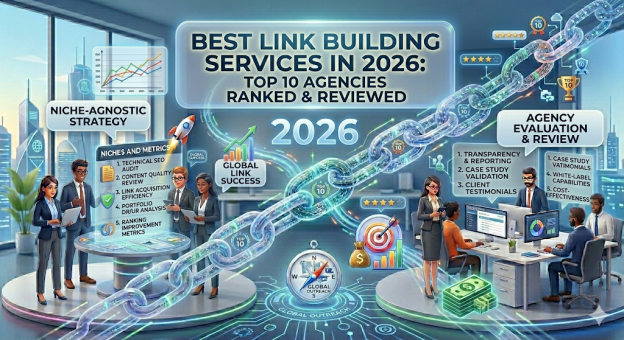
Search engines in 2026 have moved past the period of easy link quantity. The focus has shifted toward the quality of brand name points out and the context in which those points out appear. Modern ranking systems now use sophisticated AI models to figure out if a backlink is a byproduct of genuine brand authority or a calculated effort to control results. Strategic digital PR stands at the center of this change, supplying the top quality signals that online search engine prioritize over conventional, lower-tier link-building methods.
The Development of Authority Signals in 2026
The 2026 search scene is defined by a deep integration of brand sentiment and citation precision. For several years, practitioners concentrated on protecting as lots of links as possible, typically neglecting the editorial value of the source. Today, search algorithms weigh the reputational standing of the referring site as greatly as the link itself. Digital PR works by securing placements in reliable news outlets, market journals, and high-traffic blog sites that have their own established trust scores. These placements are not just links; they are recommendations that search engines translate as proof of importance and competence.
Traditional link structure often involved reaching out to small bloggers for guest posts. In 2026, these tactics provide decreasing returns. Rather, the demand for SEO Networks continues to grow because it produces links that are nearly difficult to replicate through automated ways. When a major nationwide news website or a specialized trade publication references a service, the resulting link carries a level of weight that thousands of directory site links can not match. This shift reflects a broader pattern towards "earned" media, where the value is discovered in the problem of acquisition.
How brand strategy Impacts Modern Search Rankings
Search engines now try to find a constant path of brand points out across the web to confirm a company's claims of authority. This process, typically described as entity confirmation, counts on digital PR to produce a footprint of discusses that line up with specific subjects. If a brand is regularly cited in discussions about financing, the search engine starts to associate that brand name entity with monetary know-how. This association is a main driver for rankings in 2026, specifically for queries that fall under the categories of health, wealth, or security.
The success of Actionable Link Data Resources supplies the essential signals to validate that a site is a leader in its field. This involves more than just getting a name in a short article. It requires a presence in pieces that offer real value to the reader. Online search engine can now detect user engagement patterns around these mentions. If readers are clicking through a PR-driven link and costs time on the target site, the ranking advantage is amplified. This develops a cycle where top quality PR causes much better search performance, which in turn leads to more organic visibility.
Data-Driven Storytelling and Link Destination
Among the most effective approaches in the existing 2026 market includes the production of original data sets. Journalists are constantly searching for fresh stats and insights to support their stories. By performing proprietary research and sharing the findings, organizations can attract natural links from a wide array of sources. This technique bypasses the requirement for manual outreach since the material itself ends up being a resource that others wish to cite. The links gained through information studies are often the most important in a profile since they originate from editorial teams that are highly selective about what they connect to.
Initial research study also helps in securing points out in AI-generated search summaries. As AI agents become more widespread in how people discover info in 2026, these agents focus on sources that supply special, accurate data. If a brand's data is the source of an AI's response, the brand name receives a citation that functions as a high-authority reference. This type of visibility is ending up being as important as traditional blue-link rankings, as it positions the brand name straight in the course of the user's discovery procedure.
The Death of Low-Tier Outreach and the Increase of Editorial Standards
The 2026 algorithm has successfully neutralized a lot of the outreach shortcuts used in previous years. Automated e-mail campaigns and mass-produced content are now quickly flagged by search filters. This has actually required a go back to conventional PR worths, where relationships and content quality are the most crucial elements. Digital PR professionals must act more like journalists, identifying hooks that will actually interest an editor instead of just requesting a link insertion. This high barrier to entry ensures that just the most deserving brand names arrive of the search engine result.

Concentrating on Authority Metrics for Niche Sites has actually shown reliable for companies that wish to develop a sustainable online presence. Rather of going after short-term ranking spikes, these businesses invest in long-term visibility through respectable channels. This technique safeguards the site from future algorithm updates, as made media is seldom penalized by search engines. Many updates in 2026 have actually even more rewarded sites that reveal a clear history of editorial mentions, making digital PR a core component of any risk-management plan for SEO.
Sentiment and Contextual Relevance
Contextual importance in 2026 is no longer about simply having a keyword in the anchor text. Search engines now evaluate the sentiment of the surrounding text to comprehend the nature of the reference. A link discovered within a positive evaluation or a practical how-to guide carries more favorable weight than a link discovered in a neutral listicle. Digital PR allows brands to manage this context by dealing with authors to guarantee their brand name is mentioned in a manner that shows their core values and know-how. This nuanced technique to connect building is what separates market leaders from their rivals.
The combination of social signals likewise plays a part in this environment. While social networks links are typically "no-follow," the buzz produced by an effective digital PR project can result in a rise in top quality searches. Online search engine see this boost in individuals searching for a specific brand name as a strong sign of authority. When thousands of people search for a company after seeing them mentioned on a major news website, the search engine realizes that the company is a relevant entity for its niche, which often leads to an across-the-board ranking enhancement for their primary keywords.
Future-Proofing SEO Through Brand Name Structure
As search moves further into 2026, the distinction in between SEO and standard marketing continues to blur. The most successful SEO strategies are those that concentrate on constructing a genuine brand that people acknowledge and trust. Digital PR is the bridge that connects technical optimization with brand name awareness. It guarantees that while the technical side of a website is perfect for crawlers, the reputational side is perfect for humans. This dual approach is needed for anybody aiming to preserve high rankings in a significantly competitive digital space.
Consistency is also an element that online search engine monitor carefully. A brand name that gets one big reference and then goes silent for a year is seen differently than a brand that preserves a consistent stream of media protection. A sustained digital PR effort shows search engines that a company is an active individual in its industry. This continuous activity constructs a "moat" around the brand name's rankings, making it harder for new rivals to displace them without a similar level of investment in public perception and made media.
The Function ofexpert content in Multichannel Growth
Modern digital PR does not exist in a vacuum. It works along with other marketing channels to develop an unified existence. A successful PR story can be repurposed for social media, email newsletters, and internal blog site material. Each of these channels reinforces the original authority signal, developing several touchpoints for both users and online search engine. In 2026, the goal is to be omnipresent in the niche so that online search engine have no choice however to acknowledge the brand name as a top-tier authority.
The measurement of digital PR success has actually grown. While rankings remain a crucial metric, businesses likewise look at branded search volume, recommendation traffic quality, and citation frequency. These metrics supply a more complete image of how PR is affecting the bottom line. By focusing on these broader indicators of success, business can validate the higher cost and effort associated with digital PR compared to older, less effective link-building tactics. The result is a more durable and reliable online existence that can hold up against the changes of the search environment for several years to come.

Table of Contents
- – The Development of Authority Signals in 2026
- – How brand strategy Impacts Modern Search Rankings
- – Data-Driven Storytelling and Link Destination
- – The Death of Low-Tier Outreach and the Increas...
- – Sentiment and Contextual Relevance
- – Future-Proofing SEO Through Brand Name Structure
- – The Function ofexpert content in Multichannel ...
Latest Posts
Sustainable Strategies to Earn High DA Backlinks
Choosing a Link Building Strategy for 2026
Ways to Acquire High DA Links Ethically
Latest Posts
Sustainable Strategies to Earn High DA Backlinks
Choosing a Link Building Strategy for 2026
Ways to Acquire High DA Links Ethically